
Customs clearance at the Port of Charleston
A deep-water Southeast gateway serving the automotive and advanced manufacturing corridor that grew up inland of it.
Licensed U.S. customs brokerage. Customs broker of record; movement coordinated through vetted partners.
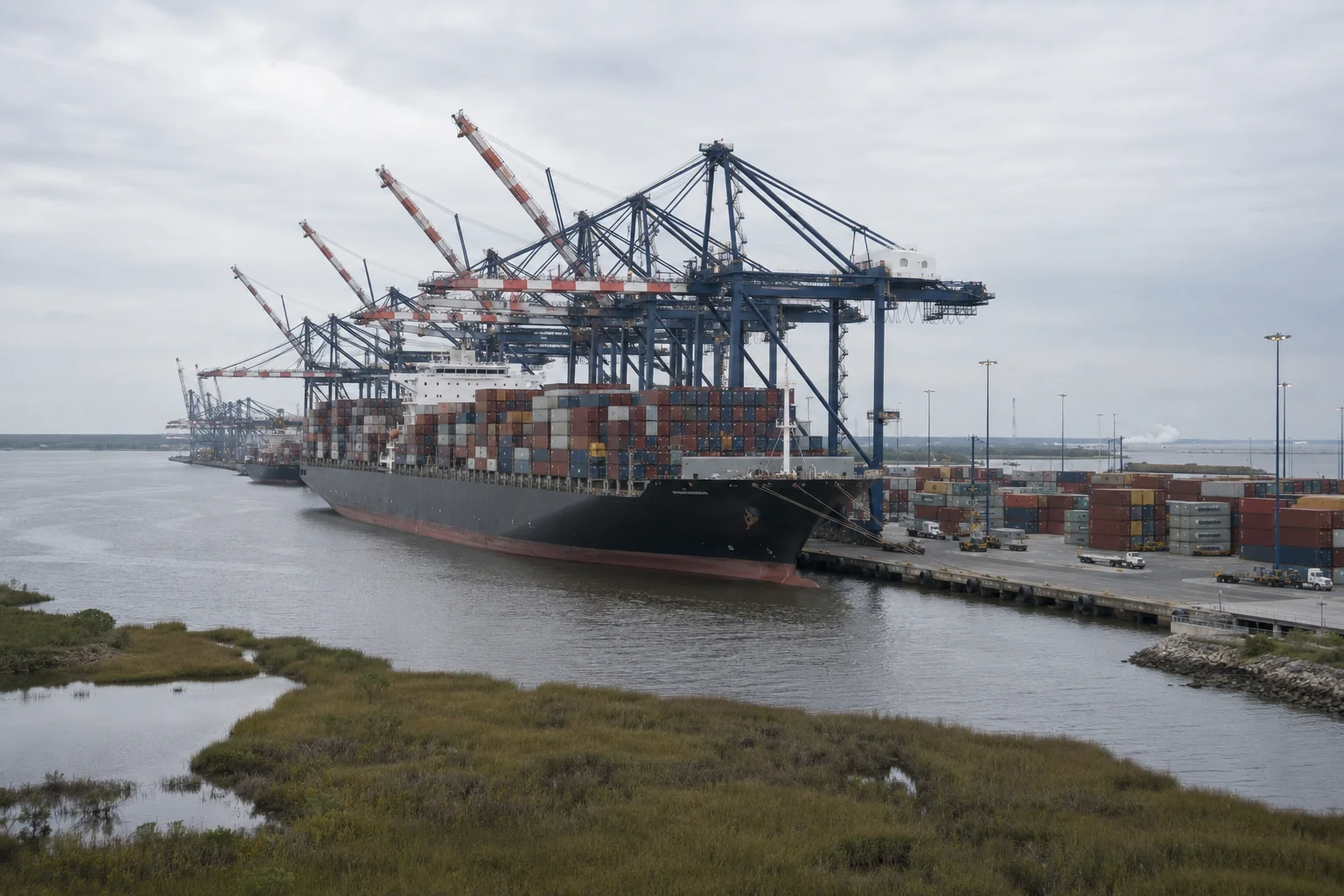
We file entries for cargo arriving at the Port of Charleston. Its depth lets it take the larger vessels, and the manufacturing corridor inland of it means a large share of the cargo is production input rather than finished consumer goods, which changes what a delay actually costs.
Key takeaways
- Deep water, able to handle the larger container vessels.
- Serves an automotive and advanced manufacturing corridor inland.
- Much of the cargo is production input, not finished goods.
- A delay on components stops a line rather than a shelf.
- We file the entry; local handling runs through vetted partners.
At this port
Production inputs raise the cost of delay
When the cargo is a component feeding an assembly line, the cost of a hold is not storage. It is the line, and it is measured against production rather than against the value of the shipment.
That asymmetry is worth naming because it changes the right approach to compliance. For an importer running to a production schedule, the argument for settling classification and agency requirements well ahead of the first shipment is much stronger than the paperwork alone would suggest.
How we cover this port
Charleston is a coverage port. We file the entry, work the classification and any agency requirements, and coordinate release.
Drayage, warehousing and inland movement run through vetted partners rather than through us.
Questions
Do you clear cargo at Charleston?
Yes, as a coverage port. We file the entry and coordinate release; handling and inland movement run through vetted partners.
Can you support recurring production shipments?
Yes, and that is where the preparation pays. Settling classification and agency requirements once, correctly, applies to every entry that follows.
What if a component shipment is held?
We work the response and coordinate the cargo. Where the shipment feeds a production schedule, the priority is the shortest defensible path to release rather than the most convenient one.
Related
Tell us what you're importing.
Commodity, origin, port and arrival date is enough to start.