
Customs clearance at PortMiami
The Caribbean and Latin American gateway, and a port where refrigerated cargo and short transit times leave very little room to fix a filing after the fact.
Licensed U.S. customs brokerage. Customs broker of record; movement coordinated through vetted partners.
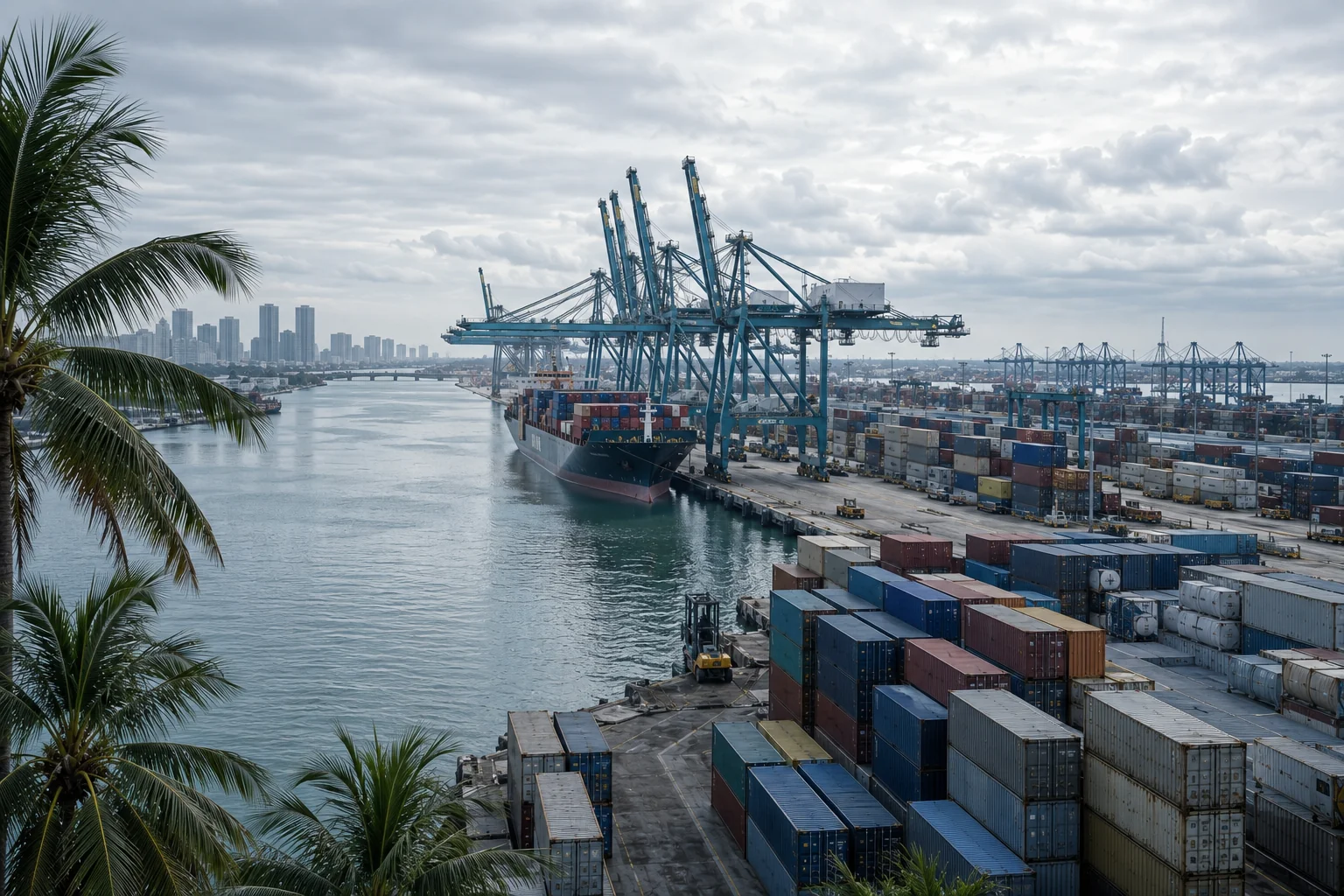
We file entries for cargo arriving at PortMiami. The trades running through here are short — much of it moves from the Caribbean and Latin America in days rather than weeks — which means the paperwork has to be right before the vessel arrives, because there is no ocean transit left to correct it in.
Key takeaways
- Short transit times leave no window to fix a filing while the cargo is at sea.
- A heavy refrigerated and perishable mix, where delay is spoilage rather than storage.
- Regional trades bring documentation practices that vary supplier to supplier.
- FDA-regulated food and produce entries are ordinary here.
- We file the entry; local handling runs through vetted partners.
At this port
Short transits change the sequence
On a long Pacific crossing, an incomplete document set can be chased while the vessel is at sea. On a two or three day run from the region, it cannot. The cargo arrives before the correction does.
Practically this moves the deadline earlier. Classification questions, missing certificates and prior notice have to be settled at booking rather than at arrival, which is a habit importers used to longer lanes take a while to acquire.
Perishables and the cost of a hold
A significant share of what arrives here is refrigerated. Where a hold on dry goods produces a storage bill, a hold on perishables can produce a total loss, and the difference in urgency is not a matter of degree.
That is the argument for treating the FDA side of the entry as part of the filing rather than a downstream step. A prior notice problem discovered at the terminal is a different problem when the clock is measured against shelf life.
How it works
-
01
Settle the paperwork early
Classification, certificates and prior notice before departure.
-
02
File the entry
Submitted ahead of arrival given the short transit.
-
03
Watch the release
Customs release and FDA review, with perishables prioritised.
-
04
Coordinate the move
Pickup and delivery through partners at the port.
Questions
Are you based in Miami?
We are a licensed U.S. brokerage filing under a national permit. PortMiami is a coverage port for us: we file the entry and coordinate, and physical handling runs through vetted partners.
How quickly do I need documents for a short transit?
Earlier than most importers expect. If the crossing is a few days, there is no practical window to correct a filing in transit, so the document set should be settled at booking.
Can you handle refrigerated and perishable cargo?
Yes. The FDA side is handled as part of the entry rather than afterwards, which matters more for perishables than for anything else.
What if my shipment is held?
We work the response and coordinate the cargo. Storage accrues throughout, and with perishables the exposure is the product itself.
Related
Tell us what you're importing.
Commodity, origin, port and arrival date is enough to start.