
Customs clearance at Port Newark and New York
The busiest gateway on the East Coast, split across two states and a dozen independently run terminals. Which terminal your box lands on changes your week.
Licensed U.S. customs brokerage. Customs broker of record; movement coordinated through vetted partners.
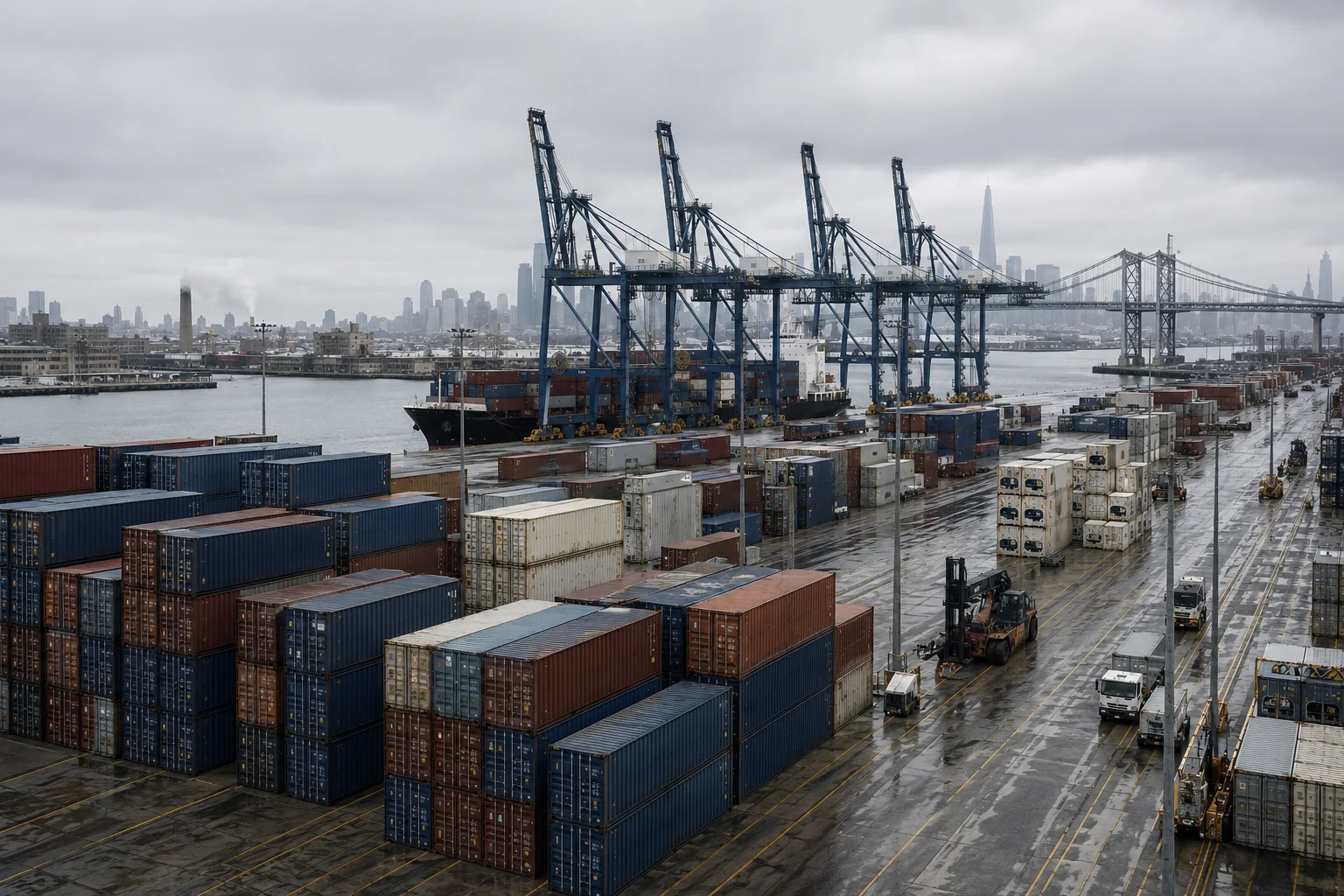
We file entries for cargo arriving at the Port of New York and New Jersey, including Port Newark, Elizabeth and the other marine terminals in the complex. It is one of our two primary ports, which means we know how examinations get routed here, which facilities handle pulled containers, and where a delay turns into a storage problem rather than an inconvenience.
Key takeaways
- One port authority, many independently operated terminals across two states.
- Your terminal determines drayage, appointments and examination routing.
- Examination referrals move to a separate facility and accrue cost while they sit.
- A dense regulated import mix means FDA entries are routine here, not exotic.
- Winter weather and terminal congestion compound each other.
At this port
Why the terminal matters more than the port
Importers tend to think of this as one place. Operationally it is not. The complex spans multiple marine terminals under separate operators, on both sides of the harbour, each with its own gate hours, appointment system and congestion pattern.
The terminal your container discharges at determines which truckers will take the move, how quickly an appointment can be secured, and how far the box travels if it gets referred for examination. Two containers on the same vessel can have materially different clearance timelines for no reason other than where they came off.
Where the delays come from
Examination referrals are the main one. A referred container leaves the terminal for a separate facility to be opened and inspected, and the clock on storage and per diem does not pause while it waits its turn. The exposure is rarely the examination itself. It is the queue in front of it.
Equipment is the second. Chassis availability and appointment windows tighten during peak periods, and a container that cleared customs days ago can still be sitting because nothing was available to move it.
Weather is the third, and it is the one importers from warmer supply chains consistently underestimate. A winter closure does not just lose a day, it pushes every appointment behind it.
FDA-regulated cargo through this port
The commodity mix arriving here is heavily regulated — food, beverages, supplements, cosmetics, devices. Prior notice, entry review and sampling are ordinary parts of the work rather than an escalation, and an entry filed without regard for the FDA side of it will find that out at the worst moment.
Where an entry is held, the response window is short and the storage clock is already running. That combination is why we treat the FDA review as part of filing the entry rather than something to deal with afterwards.
What we do here and what we don't
We are the customs broker of record. We classify, file, manage the FDA side, and coordinate examinations, held cargo and release.
Drayage, warehousing and physical handling run through vetted partners. Formal appeals and legal proceedings are outside brokerage scope, and where a matter reaches that stage qualified legal counsel is the right resource. We will say so rather than working beyond our scope.
How it works
-
01
Confirm arrival and terminal
Vessel, terminal and expected discharge, before the box lands.
-
02
File the entry
Classification, valuation and any agency filings the commodity requires.
-
03
Watch the release
Customs release, FDA review, and anything referred for examination.
-
04
Coordinate the move
Appointment, drayage and delivery through partners at the port.
-
05
Close the file
Documentation retained and anything outstanding resolved.
Common mistakes
- Assuming the port behaves as one unit. Terminals differ enough to change your timeline.
- Booking delivery before release is confirmed. A referral rewrites the schedule.
- Leaving FDA requirements until arrival. Prior notice is not something to catch up on.
- Ignoring free time. Storage and per diem accrue independently of your clearance.
- Treating winter as an ordinary quarter. Weather closures cascade through appointments.
Questions
Do you have an office at Port Newark?
We are a licensed brokerage filing under a national permit, and this is one of our two primary ports. Physical handling at the terminal — drayage, examination moves, warehousing — runs through vetted partners on the ground.
How long does clearance take here?
An entry with complete documentation and no agency involvement can release quickly. What extends it is an examination referral, an FDA review, or a document request. The variable is almost never the filing.
What happens if my container is pulled for examination?
It moves from the terminal to a separate facility to be opened and inspected, then returned. We coordinate the move and the response. Storage and per diem accrue throughout, which is why speed on the paperwork matters.
Can you handle FDA-regulated shipments through this port?
Yes. Prior notice, entry review, sampling and held cargo are routine work here given the commodity mix arriving through the complex.
Do you file ISF as well as the entry?
Yes. ISF is filed ahead of loading and is separate from the entry, and missing it creates exposure before the vessel has even sailed.
What do you need from me to start?
Commodity, origin, terminal and arrival date is enough for a clearance quote and a note on anything likely to hold the entry up.
Related
Tell us what you're importing.
Commodity, origin, port and arrival date is enough to start.