
Customs clearance at Miami International Airport
The country's principal perishable air gateway. Everything moves faster here, including the point at which a problem becomes unrecoverable.
Licensed U.S. customs brokerage. Customs broker of record; movement coordinated through vetted partners.
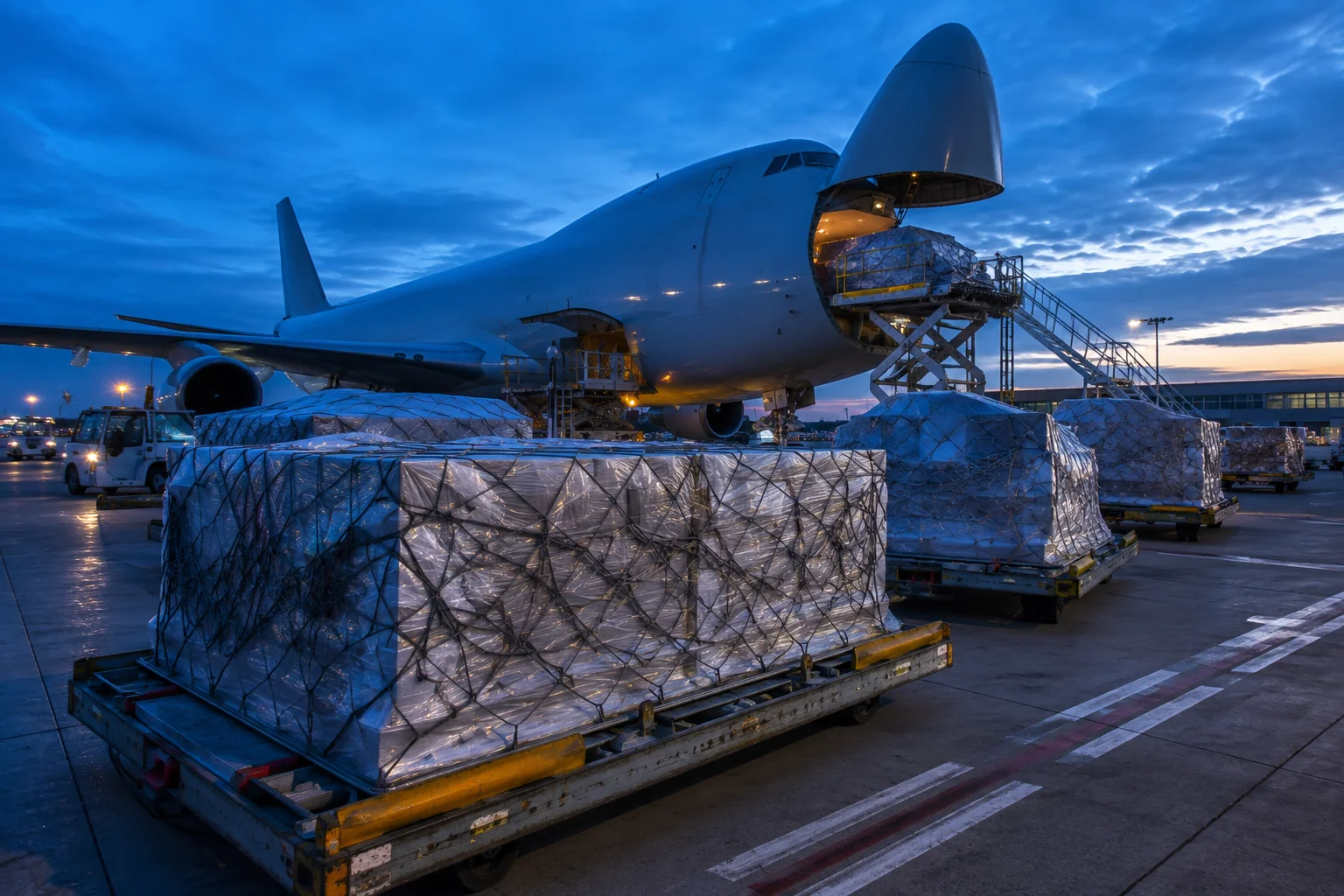
We file entries for air cargo arriving at Miami International Airport, the main U.S. gateway for perishable air freight. Air cargo compresses every timeline: the goods are in the country hours after departure, and a filing that would have been corrected in transit by sea has no such window here.
Key takeaways
- Air transit removes the correction window entirely.
- The dominant U.S. entry point for perishable air freight.
- Flowers, seafood, produce and pharmaceuticals carry temperature and time exposure.
- FDA prior notice must be in place before arrival, not after.
- We file the entry; ground handling runs through vetted partners.
At this port
Air cargo removes the margin
An ocean shipment gives you weeks in which a classification can be revisited or a certificate chased. Air gives you hours. The filing has to be complete and correct before the aircraft lands, because after it lands there is no time left in which to be wrong.
This is the single most common adjustment importers moving from ocean to air have to make, and it is a change in sequence rather than in effort.
Perishables and temperature-controlled goods
Much of what arrives here cannot wait. Flowers, seafood and fresh produce have a usable life measured against the delay, and pharmaceuticals carry temperature requirements that a hold can breach regardless of how the hold is eventually resolved.
For this cargo the FDA review is not a downstream administrative step. Prior notice has to be in place ahead of arrival, and where an entry is held the response has to move at the speed of the product rather than the speed of the paperwork.
How it works
-
01
Confirm requirements before departure
Classification, certificates and prior notice, ahead of the flight.
-
02
File ahead of arrival
The entry is ready before the aircraft lands.
-
03
Work the release immediately
Customs release and FDA review, prioritised by product life.
-
04
Coordinate recovery
Ground handling and delivery through partners at the airport.
Questions
How is air clearance different from ocean?
Mainly in timing. Air removes the transit window in which documents are usually corrected, so the filing has to be complete before the aircraft arrives rather than before the cargo is collected.
Can you clear perishable shipments?
Yes. Prior notice and the FDA review are handled as part of the entry, which matters most where the product has a limited usable life.
What happens if perishable cargo is held?
We work the response immediately and coordinate the cargo. With perishables the exposure is the product rather than the storage, so speed on the response is the whole game.
Do you cover other airports?
Filing is national, so tell us the gateway and we will say plainly what we can coordinate there and what would run through a partner.
Related
Tell us what you're importing.
Commodity, origin, port and arrival date is enough to start.