
Customs clearance at Port Tampa Bay
Florida's largest port by tonnage, weighted toward bulk and breakbulk, with container volumes serving the growing central Florida market.
Licensed U.S. customs brokerage. Customs broker of record; movement coordinated through vetted partners.
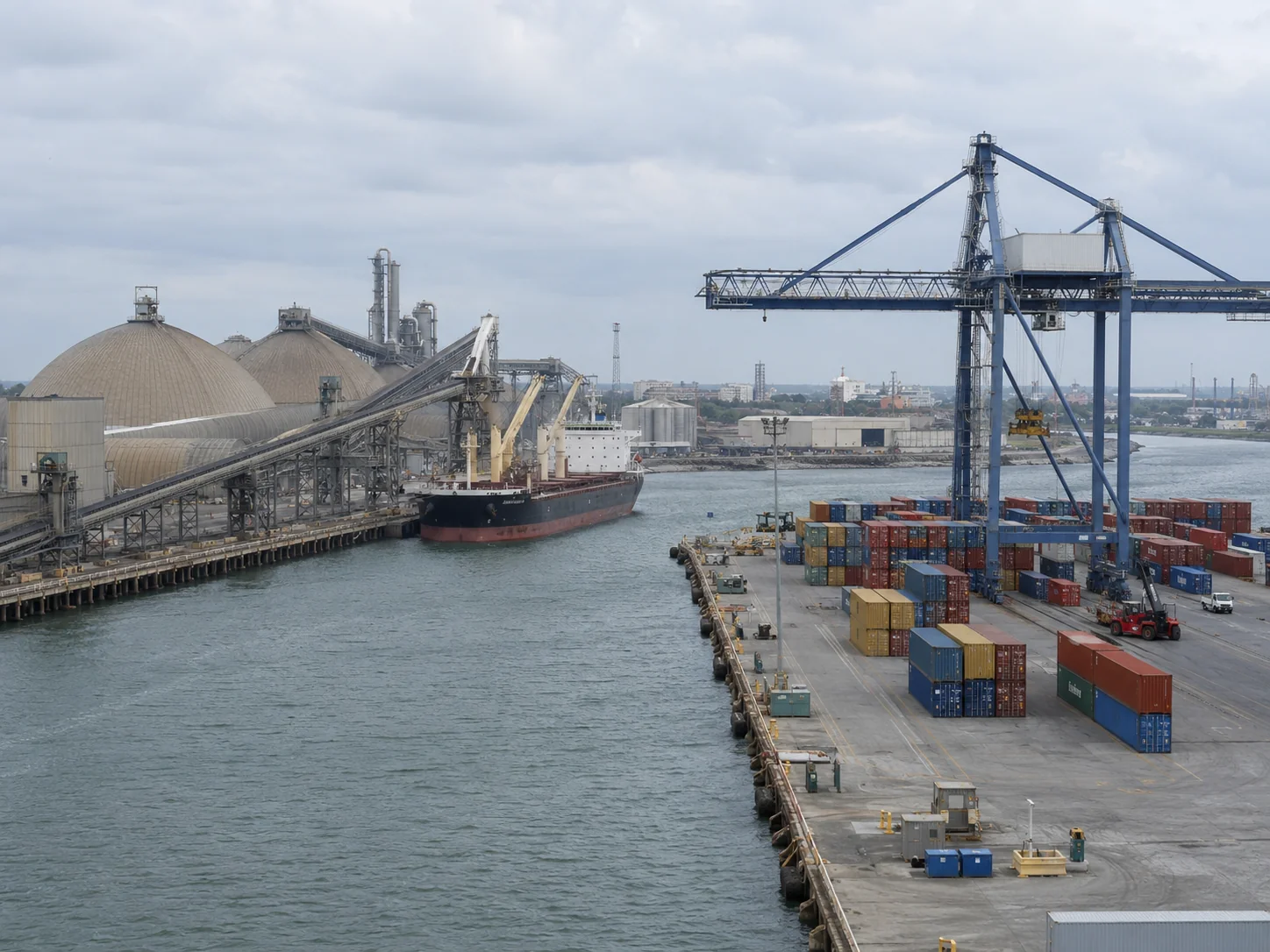
We file entries for cargo arriving at Port Tampa Bay. The port handles more tonnage than any other in Florida, most of it bulk and breakbulk rather than containers, and the container business it does handle largely serves distribution into central Florida rather than transhipment.
Key takeaways
- Weighted toward bulk and breakbulk rather than container volume.
- Container services serve central Florida distribution.
- Bulk and breakbulk raise valuation and quantity questions containers rarely do.
- Project and oversized cargo carries its own documentation demands.
- We file the entry; local handling runs through vetted partners.
At this port
Bulk and breakbulk ask different questions
A container is a sealed unit with a packing list. Bulk and breakbulk are not, and the entry has to account for quantities measured on arrival, for cargo that may be discharged over several days, and for valuation that depends on what was actually delivered rather than what was booked.
Where a shipment is oversized or moves as project cargo, the documentation burden grows again. These are answerable questions, but they are answered before arrival rather than after.
How we cover this port
Tampa is a coverage port. We file the entry, manage classification and valuation, handle any agency requirements, and coordinate release.
Physical handling, storage and inland movement run through vetted partners. We would rather state that than imply a presence on the dock that we do not have.
Questions
Do you clear cargo at Port Tampa Bay?
Yes, as a coverage port. We file the entry and coordinate the release; handling and inland movement run through vetted partners.
Can you handle bulk and breakbulk entries?
Yes. They raise quantity and valuation questions containers usually do not, which is worth settling before the vessel arrives.
Is Tampa a good option instead of Miami?
It depends on the commodity and where the goods are going. For central Florida distribution it can be, and the answer turns on inland cost rather than on the clearance itself.
Related
Tell us what you're importing.
Commodity, origin, port and arrival date is enough to start.