
One company watching the entry and the cargo
Most import delays do not begin at the border. They begin in the handover between the party moving the freight and the party filing the entry. We remove that handover.
Customs broker of record. Movement coordinated through vetted partners operating under their own authority.
Import coordination means a single company manages the customs entry and the movement of the cargo together. Retro Customs Brokers acts as the customs broker of record and coordinates ocean, air, drayage, warehousing and trucking through vetted partners who operate under their own authority — so the entry is ready before the cargo arrives rather than after.
Key takeaways
- You can keep the providers you already use, or use ours — both work.
- We are the customs broker of record; freight moves under our partners' authority.
- Ground coverage is strongest at Port Newark and the Port of Los Angeles.
- Entries are filed electronically at every other U.S. port of arrival.
- The advantage is timing, not convenience — the entry is prepared while cargo is still moving.
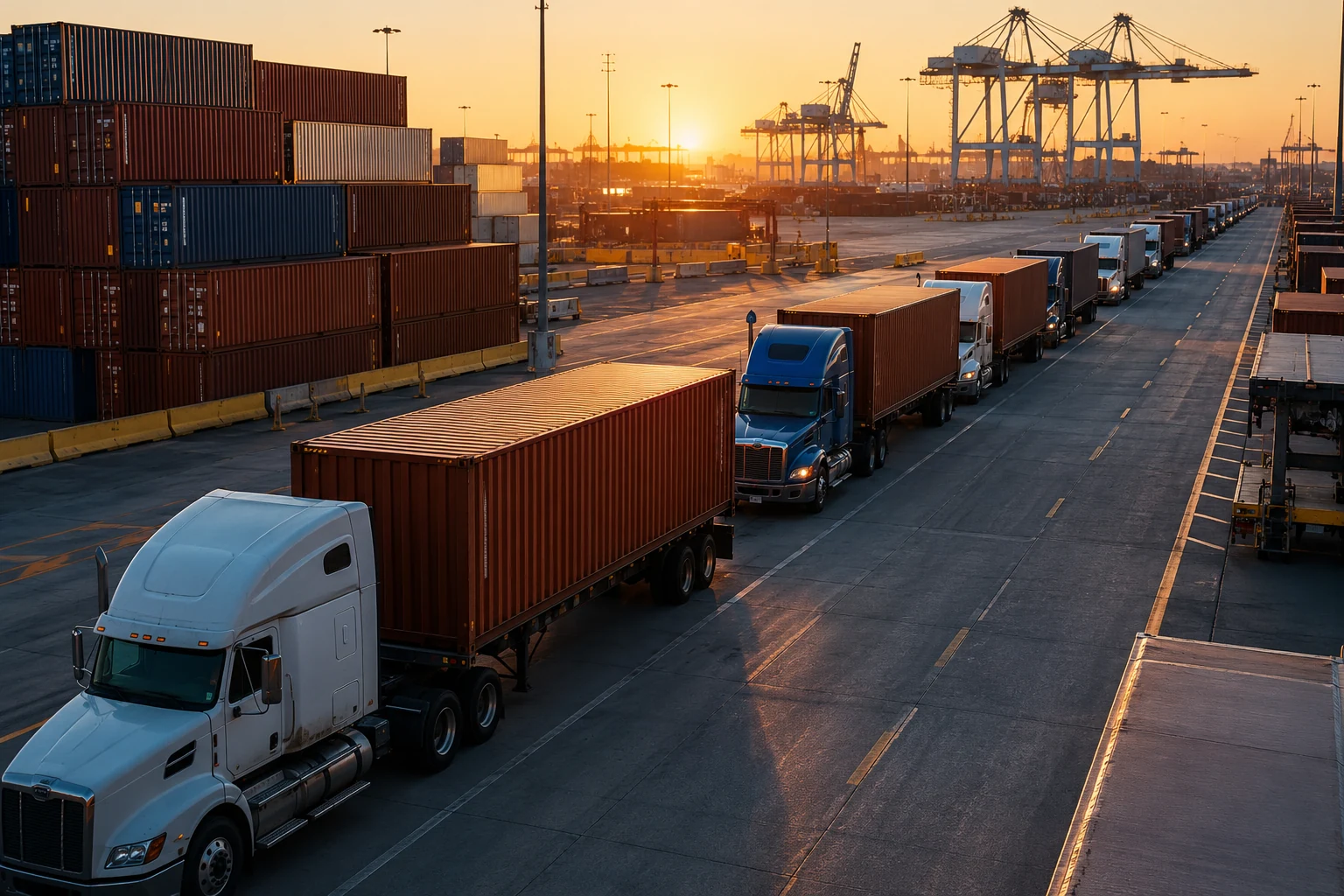
Where the delays actually start
Ask an importer why a container sat for four days and the answer is rarely the vessel. It is that the commercial invoice reached the broker on the day of arrival. Or that the ETA moved and nobody said. Or that free time expired because the forwarder assumed the broker was tracking it and the broker assumed the forwarder was.
These are coordination failures, not customs failures. They are also invisible until the storage invoice arrives, at which point everybody has a reasonable explanation and the importer pays regardless.
Two ways to work with us
Keep your providers. Most importers already have a forwarder, a trucker and a warehouse they trust. We file the entry, track the arrival, and coordinate the timing around the arrangements you have. Nothing changes except that someone is now watching both sides.
Or use ours. If you would rather not assemble and manage a supply chain, we coordinate the movement through vetted ocean and air capacity, drayage, warehousing and transloading, and domestic trucking. One point of contact, one company accountable for the timing.
What we are, precisely
Retro Customs Brokers is the customs broker of record. The freight is carried and forwarded by licensed partners operating under their own authority. We do not own vessels, aircraft, trucks or warehouses, and we do not hold ourselves out as the underlying carrier or forwarder.
That distinction matters, and we would rather state it plainly than let it be assumed. What we contribute is the entry and the coordination around it — which is the part that most often determines whether cargo moves on schedule.
Ports
Entries are transmitted electronically, so we act as your broker at every U.S. port of arrival. Our ground coverage is deepest at Port Newark and the Port of Los Angeles, where our drayage relationships are strongest. At other gateways we arrange handling locally, and we will tell you honestly where coverage is thinner rather than discovering it together at the terminal.
How it works
-
01
Booking confirmed
We know the commodity, origin, port and arrival date at the point the shipment is booked — not when it lands.
-
02
Entry prepared in parallel
Classification, duty exposure and document review run while the cargo is still moving, not after it arrives.
-
03
Arrival tracked
Vessel or flight monitored, so free time is known rather than discovered on an invoice.
-
04
Entry transmitted before arrival
Where the data allows it, the declaration is filed ahead of the cargo landing.
-
05
Ground handling arranged
Drayage, warehousing or transloading booked against actual entry status rather than assumed status.
-
06
Queries and exams absorbed
If CBP or another agency asks something, it comes to the party who can answer it.
-
07
Delivered
Trucking to destination once every authority has released, with terminal charges settled.
Common mistakes
- Two parties, neither watching free time. Demurrage is the most avoidable charge in importing and the most commonly incurred.
- Documents sent to the forwarder, not the broker. The party who needs them to file the entry gets them last.
- Arrival date changes that never reach the broker. An entry timed against the original ETA is no use.
- Exam notices sent to whoever booked the freight. They cannot answer it, and days pass while it is forwarded.
- Assuming the cheapest freight quote is the cheapest movement. It is not, if it comes with four days of storage.
Questions
Do you arrange the freight as well as the customs entry?
We coordinate it. Retro Customs Brokers is the customs broker of record; the ocean, air, drayage, warehousing and trucking are performed by vetted partners operating under their own authority. You deal with us, we deal with them, and the entry and the movement stay in step.
Can I keep the forwarder and trucker I already use?
Yes, and most importers do. We file the entry and coordinate the timing around whoever is already handling your cargo. Nothing about those relationships needs to change.
Which ports do you cover?
We file entries electronically at every U.S. port of arrival. Ground coverage is strongest at Port Newark and the Port of Los Angeles, where our drayage relationships are deepest, and we arrange handling locally at every other gateway.
What actually goes wrong at the handover?
Documents reach the broker late, so the entry is prepared under time pressure. Arrival dates change and nobody passes it on. Free time expires because each party assumed the other was tracking it. An exam notice sits unread because it went to whoever booked the freight rather than to whoever can answer it. None of these are complicated; they just need one party watching both sides.
Do you own trucks, vessels or warehouses?
No, and we do not present ourselves as a carrier or forwarder. Freight is carried and forwarded by licensed partners under their own authority. What we contribute is the customs entry and the coordination around it.
Is this more expensive than arranging it myself?
Not inherently. You are paying the same carriers and the same terminals. What changes is that one party is watching the entry and the cargo together, which is where avoidable storage and demurrage usually come from.
Related
Tell us what you're importing.
Commodity, origin, port and arrival date is enough to start.